
Shade Is What Ages a Fence Here, Not Time
Walk any block east of the Willamette and you can read each yard's sun exposure in its fence. South-facing runs in open light still look presentable after fifteen winters. The same boards under a mature maple grow a green film by year three and go soft at the soil by year eight. The wood is not the variable. The drying time is.
So our shade detailing starts underground: a bed of crushed rock beneath each post, concrete crowned so runoff sheds away from the grain, and embedment carried below the depth where rot does its work. Above grade, we hold the lowest board a few inches clear of the dirt, bevel the cap so the top edge drains instead of soaking, and choose stainless-grade fasteners, because a shaded fence stays damp long enough to corrode anything lesser. None of it shows from the sidewalk. All of it shows in year twelve.
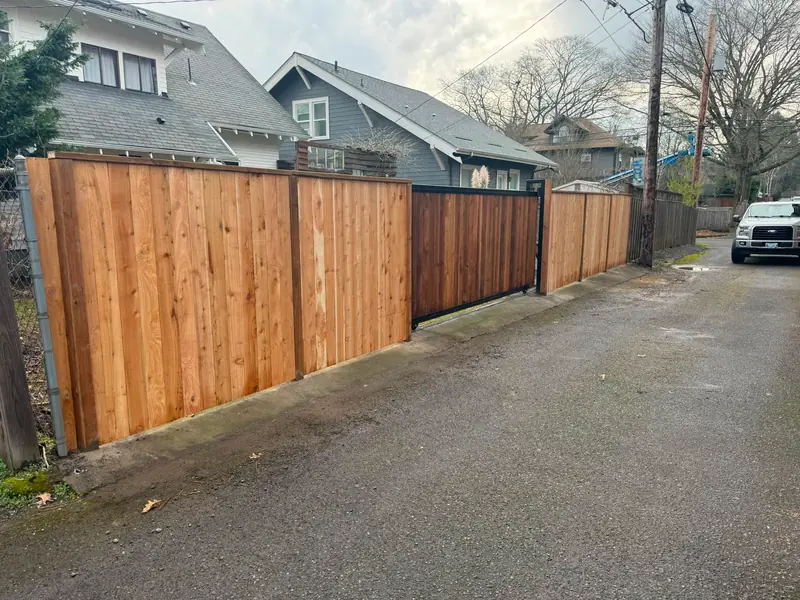
Rebuilding on Lines That Have Held Fences for a Century
Inner-lot replacement work is half demolition craft. The line you are fencing has usually carried two or three fences already, which means buried concrete plugs, rusted post stubs, and a neighbor's rose bed planted tight against the boards. We pull the old footings out rather than setting new posts beside them, hand-dig where an auger would chew through roots the whole street cares about, and stage lumber through side yards too narrow for a wheelbarrow to turn around in. Your garden comes through the project intact, and so does the neighbor's.
Style rewards restraint on these older blocks. A flat-top privacy run with a modest cap suits a foursquare, while the bungalow crowd often asks for low pickets out front, where zoning keeps street-facing fencing short anyway.
How the Job Runs, First Call to Final Sweep
One person measures your line, writes the number, and answers the phone afterward. Once you approve, the crew tears out the old fence, hauls the debris that same day, and plants posts in concrete that gets time to cure before a single board hangs. Then rails, boards, cap, and gates, followed by a walkthrough with you before the truck is loaded.
- Western red cedar, never a lookalike species
- Crushed-rock drainage under every footing
- Corrosion-proof hardware rated for wet climates
- Bottom boards lifted off the ground
- Gate frames braced against sag
- Debris gone and the site raked before we leave
Want the deeper dive? Read our full cedar fence installation page, or see everything we build on our Portland fence company page.