
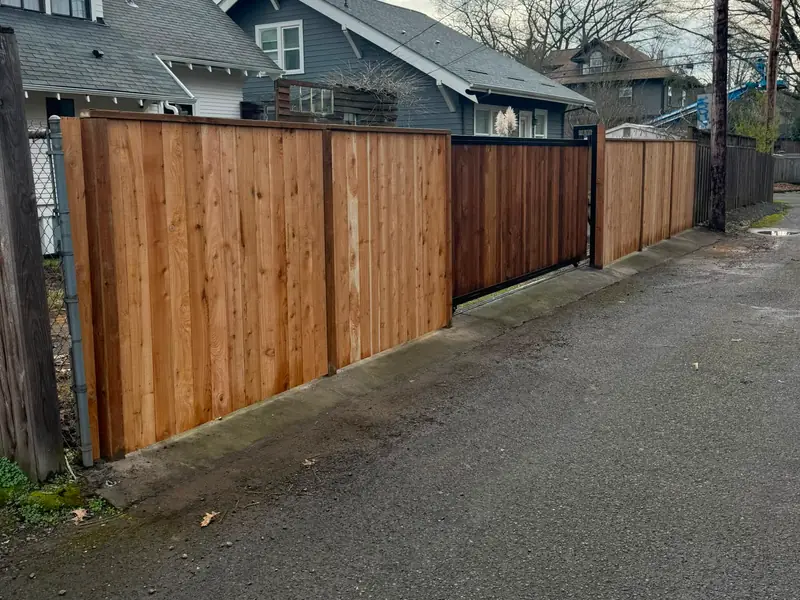
The eight things that move a fence quote
Two houses on the same street can get quotes hundreds of dollars apart for good reasons. When we walk a property, these are the levers we're weighing:
- Footage. The obvious one. Long runs earn a better per-foot rate because setup costs spread out.
- Height. A 6 foot privacy fence uses more board, deeper posts, and sometimes a permit that a 4 foot picket line doesn't.
- Material. The ladder below. This is the biggest single decision you control.
- Terrain. Slopes mean stepped or racked panels and more layout time. Flat former farmland in Hillsboro builds faster than a hillside in West Linn.
- Gates. Each one is a small construction project of its own: frame, bracing, hardware, and tuning. Driveway gates and openers are their own line items.
- Tear-out. Removing and hauling an old fence takes labor and disposal fees. Some bids hide this; ours states it.
- Access. A backyard reachable only through a 30 inch side gate means every post, bag of concrete, and board moves by hand.
- Ground conditions. Roots, rock, old concrete footings, and high winter water tables all slow down post setting.
The material ladder, from least to most
Relative cost is the honest way to compare materials without pretending your yard is average. Lifespans assume proper installation, which is exactly the part we don't skip.
| Material | Relative cost | Typical lifespan | Maintenance |
|---|---|---|---|
| Chain link (galvanized) | $ | 25+ years | Basically none |
| Chain link (vinyl-coated) | $–$$ | 25+ years | Basically none |
| Cedar | $$ | 20–25 years | Optional stain, occasional board swaps |
| Vinyl | $$–$$$ | 25–30 years | A hose rinse |
| Ornamental steel or aluminum | $$$ | 30+ years | Touch up coating scratches |
Divide cost by years of service and the ranking shuffles: ornamental iron is often the cheapest fence you can own, and the bargain bid is often the most expensive. Chain link stays the value king for utility runs, which is why we recommend it without embarrassment where it fits.
How to compare two bids apples to apples
A quote is a list of decisions, and the cheap ones hide the decisions that fail first. Before you compare bottom lines, make both bidders answer the same five questions in writing:
- How deep do posts go, and are they set in concrete below the rot line?
- What exact material grade: western red cedar or white-wood? Thick-wall vinyl or bargain panels?
- What fasteners: hot-dipped galvanized or stainless, or the kind that streak black in a year?
- Is tear-out and haul-away included, with a number attached?
- What does the workmanship warranty cover, and is it written down?
If a bid can't answer those, it isn't lower, it's incomplete. We put all five in every estimate so you can hold us to them, and we're comfortable being compared line by line. That's the whole pitch: not the cheapest bid on the table, the cheapest fence per year you'll own it.