
Evergreen Gate & Fence Works builds and repairs fences throughout Woodland, from the downtown blocks around Horseshoe Lake out to the hillside subdivisions off Green Mountain Road and the river-valley acreage upstream along SR-503. The city sits across two counties, mostly Cowlitz with a slice of Clark, yet one fence code applies citywide. Horseshoe Lake itself is a former river bend cut off in 1940, and some of the housing near it dates from close to that era, which tells you what shape the original fences are in.
Chain link, cedar, vinyl, and ornamental iron cover the town lots; field and livestock fencing covers the Bottoms and the acreage upriver. We fabricate custom gates, hang openers, and repair what storms and rot take down. The company is based in Portland and fully licensed for Washington projects, estimates cost nothing, and bids are itemized so you can see where the money goes.
At a glance
- Service area
- Woodland, Washington (Cowlitz County)
- Neighborhoods
- Downtown, Woodland Bottoms, Green Mountain Road area, Lewis River Road corridor
- Services here
- Cedar Fence Installation, Vinyl Fence Installation, Ornamental Iron Fencing, Chain Link Fencing, Custom Driveway & Yard Gates, Fence Repair & Replacement
- Estimates
- Free and in writing, after a scheduled walk-through
- Call or text
- (971) 405-7863 (Washington line)
Post Holes in the Bottoms
The Bottoms is a diked peninsula of farmland where the Lewis meets the Columbia, and its water table sits high for much of the year. Standard post setting fails out there in slow motion: concrete poured into a wet hole cures poorly, untreated wood wicks moisture, and frost heave does the rest. We adjust the whole footing approach for saturated ground, deeper embedment, drainage rock, treated or steel posts depending on the fence type. For field and livestock runs we brace corners and gate posts heavily, because wire tension over long distances pulls hardest at the ends.
Equipment access is the other planning item. Gates get sized for what farms use now, not what they used in 1960.
Hillside Lots East of I-5
The newer subdivisions in the east hills trade the water table problem for slope and exposure. Fence lines climb, so we rack or step panels to hold a clean top line, and we watch drainage on cut slopes where winter water moves fast along the grade. Wind funnels down the river valley and hits these elevated lots harder than newcomers expect; solid privacy panels up there need deeper, stouter posts than the same fence would need in town.
Closer to the lake, the housing stock is older and so are the fences. Many original installs are past saving, and replacement often costs less over time than repeated patch jobs on rotten framing.
The 3-Foot Permit Line
City code here is stricter than most: any fence over 3 feet tall requires a fence permit, and only those at 3 feet or under are exempt. In low-density residential zones, front yards and areas within 15 feet of a street-side property line are capped at 3 feet for solid fences, or 4 feet if the design is at least half open. Rear and interior side lines allow 6 feet, and denser zones permit up to 7 feet where a lot abuts nonresidential property. Rules change, we confirm current requirements as part of every quote.
Fence and gate services in Woodland
- Cedar Fence Installation in Woodland · Western red cedar privacy and picket fences, built post-by-post for Northwest weather.
- Vinyl Fence Installation in Woodland · Low-maintenance vinyl privacy and picket fencing that won't need staining, ever.
- Ornamental Iron Fencing in Woodland · Wrought-iron-style steel and aluminum fencing: security and curb appeal that lasts decades.
- Chain Link Fencing in Woodland · Galvanized and vinyl-coated chain link for yards, kennels, and commercial perimeters.
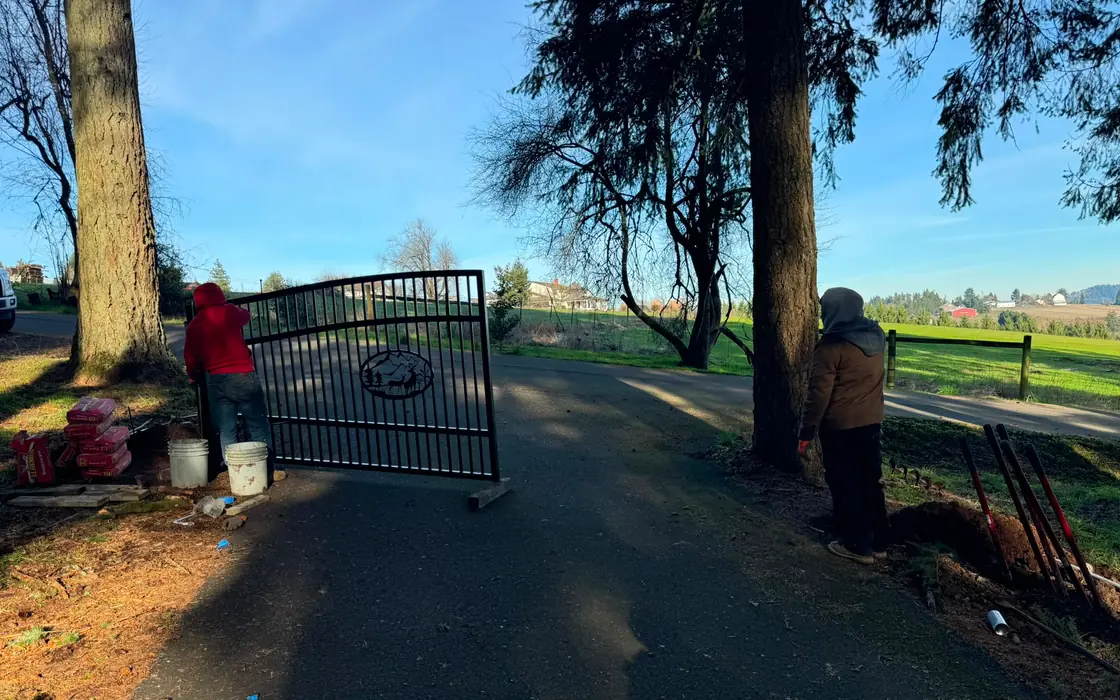
- Custom Driveway & Yard Gates in Woodland · Driveway, garden, and side-yard gates built to match your fence and hung to swing true.
- Fence Repair & Replacement in Woodland · Storm damage, leaning posts, and rotten sections, repaired or replaced honestly.