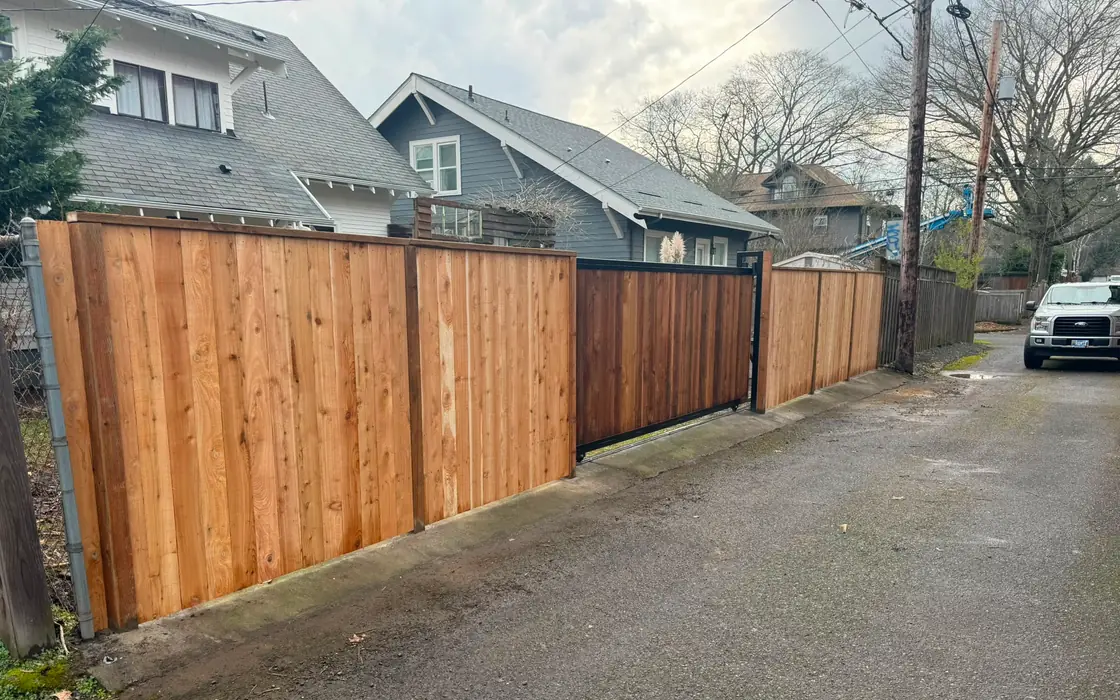
Sherwood Fence Builders and Gate Installers
Rolling ground, tight HOA plats, and hobby farms up Parrett Mountain make one fence spec useless here. We build everything from cedar and vinyl to ornamental iron, fitted to the lot in front of us.
Sherwood reads in layers: small early-1900s lots in Old Town, the Cannery Square blocks beside it, then wave after wave of master-planned subdivisions from the 1990s through the 2010s, most with active HOAs and CC&Rs that spell out what a fence may look like. Southwest of the city limits the ground climbs into the Chehalem foothills, with vineyard rows, pastures, and long gravel driveways.
We handle the whole spread: cedar privacy and picket fences, vinyl, iron, chain link where code allows it, pasture fencing, custom gate builds, openers, and repair calls for fences and gates alike. The crew that measures is the crew that builds, so nothing gets lost between quote and install. Licenses, bonding, and insurance are current on both sides of the Columbia, and every estimate is free and itemized. Dial (503) 555-0187 to set up a walk-through.
Cedar Creek, Rock Creek, and the Refuge Edge
The Tualatin River National Wildlife Refuge sits along the north edge, and the low ground near it stays wet deep into spring. Cedar Creek runs through the middle of town past Stella Olsen Memorial Park, Rock Creek drains the other side, and plenty of yards back onto a greenway or a swale that keeps soil soft for months. Fences along those corridors need deeper posts, footings that shed water, and wood held clear of the ground so it can dry out. The rest of the terrain rolls, which means almost no fence line here runs dead flat. We measure the fall on every run and decide panel by panel whether to rack with the grade or step it, instead of forcing one method across the whole yard.
HOA Subdivisions, Old Town Lots, and Foothill Acreage
Most housing here arrived in master-planned phases starting in the 1990s, and the CC&Rs usually name a fence style, a height, and sometimes a stain color. We build to the approved spec and can supply drawings for architectural review. Small-lot construction keeps coming, and with growth mapped across Sherwood West, bare backyards will need fencing for years. Old Town is different work: narrow early-1900s lots where a low picket or ornamental iron suits the house better than a six-foot cedar wall, and where property lines deserve a careful check before anything gets set. Out southwest, the ground climbs toward vineyard and horse country, where woven wire, board fence, and gates hung to swing clear on sloped driveways are the normal order.
Fence Rules Under SMC 16.58
City code, SMC 16.58, caps front-yard fences at 42 inches and bans chain link in front yards. Side and rear fences can run six feet, dropping to 42 inches where they border a public pedestrian way or alley. There is no city fence permit; the state's threshold kicks in above seven feet, taller than anything we set in a backyard. The city has also published proposed updates to its fence chapter, so what applied last season may read differently next. Rules change, we confirm current requirements with the city as part of every quote.
Fence and gate services in Sherwood
- Cedar Fence Installation in Sherwood · Western red cedar privacy and picket fences, built post-by-post for Northwest weather.
- Vinyl Fence Installation in Sherwood · Low-maintenance vinyl privacy and picket fencing that won't need staining, ever.
- Ornamental Iron Fencing in Sherwood · Wrought-iron-style steel and aluminum fencing: security and curb appeal that lasts decades.
- Chain Link Fencing in Sherwood · Galvanized and vinyl-coated chain link for yards, kennels, and commercial perimeters.
- Custom Driveway & Yard Gates in Sherwood · Driveway, garden, and side-yard gates built to match your fence and hung to swing true.
- Fence Repair & Replacement in Sherwood · Storm damage, leaning posts, and rotten sections, repaired or replaced honestly.
Good to know
Fencing in Sherwood: common questions
Can I put chain link in my front yard?
No. City code keeps chain link out of front yards entirely, and front fences top out at 42 inches regardless of material. Chain link is still allowed on side and rear lines, where it stays the budget workhorse for dogs and bare new lots. For street-facing frontage, a low cedar picket or an ornamental iron panel meets the height rule and reads better from the sidewalk anyway.
What drives the price of a fence here?
Material first: chain link, then cedar, then vinyl and iron, roughly in that order. After that it is footage, grade, and access. Rolling lots take more layout and cutting than flat ones, and foothill properties add post count and travel. Gates and operators price separately. We measure on site and hand over a free line-item estimate, so you can see where every dollar goes.
Is a permit required for a new fence?
The city does not issue fence permits; Oregon's threshold only kicks in past seven feet. Height limits still bind: 42 inches out front, six feet along the back and sides, 42 inches where a fence borders public walkways. With code updates under discussion at city hall, we verify the current chapter before setting a single post, and we flag anything that affects your design.
Will you deal with our HOA's fence requirements?
Yes, and in master-planned neighborhoods like Woodhaven that covers most projects. We build off the CC&R fence section, match the approved style and height, and provide specs or sketches when the review committee asks. Getting approval sequenced correctly up front is faster than arguing with a board afterward, and it keeps your fence matched to the ones on either side.
My yard backs the Cedar Creek greenway and stays damp. What holds up?
Ground moisture is the enemy, not rain hitting boards. Along the creek corridors we set posts deeper, shed water off the footings, and hold cedar clear of the soil; pressure-treated posts under cedar boards is a proven combination there. Vinyl shrugs at damp entirely, and galvanized or vinyl-coated chain link works anywhere outside the front yard. Site drainage tells us which to recommend, so we look before we spec.
Can you fence a horse property up toward Parrett Mountain?
Yes. Foothill parcels usually want woven wire or board fencing, braced corners that hold tension across grade changes, and gates that clear a truck and trailer. Slopes complicate bracing, so we lay out the pulls before we dig. An operator on the road gate saves the walk in the rain at the end of a long gravel driveway, and we install those too.
We bought new construction with a bare backyard. Where do we start?
Confirm your property pins, read your CC&Rs, then decide with the neighbors whether you are sharing lines. On small new lots a good-neighbor cedar design, finished the same on both faces, keeps everyone happy and splits nothing awkwardly. Builders often leave grading loose along rear lines, so we check compaction before setting posts. From there layout is quick, and we can match panels already going up on your street.
Is my neighbor legally on the hook for half a boundary fence?
Sometimes, on paper. Oregon's partition fence statute has adjoining owners splitting a division fence's value, yet it reaches only a neighbor who encloses property against yours, so a fence the other side never uses stays your bill. Around here we recommend settling it in writing first, and on the smaller subdivision lots we often draft one quote showing each owner's half. When agreement fails, that question goes to an attorney, not a fence crew.
How early should we start HOA paperwork if we want a fence this summer?
Earlier than most owners think. Reviews commonly run from two weeks up to six, association depending, and a returned packet resets the wait. Committees around Woodhaven and the newer master plans want a sketch of the fence on your lot, the style, the material, the height, often a stain color, and once in a while a signature from the abutting neighbor. Submit, then schedule, in that order. We furnish the sketches and specs boards expect.
How many days does the build itself take?
Building it: usually a day, sometimes three, for a typical residential yard. Waiting is the longer stretch. Locate marks by law need two business days minimum, master-planned plats add architectural review to the front end, and our schedule carries a heavier backlog through the spring rush than through winter. On rolling ground we also confirm layout on site before dig day, which keeps the build itself moving.
Planning a fence in Sherwood?
Free written estimates, honest advice on materials, and a crew that treats your property like its own. Call or send the details.