Lake Oswego Fence Company for Craftsman-Grade Cedar and Iron
Wooded lots, shaded fence lines, and neighbors who notice the details. We build cedar and iron that holds its line and its looks under a fir canopy.
Fence work in Lake Oswego is finish carpentry at yard scale. The cottages on First Addition's walkable grid sit close together, so both faces of a fence get seen and both get built clean. Out in Lake Grove, mid-century houses on big wooded parcels need long runs threaded between mature firs, and the tree-preservation culture here means we dig by hand near old roots instead of grinding an auger through the root plate.
Evergreen Gate & Fence Works turns out custom cedar, ornamental iron, and vinyl fencing, along with gates built to match, automatic openers, and repair jobs that blend in rather than stand out. Our licensing, bonding, and insurance are active in Oregon and Washington alike. Estimates are free and detailed, down to the fastener spec. Chain link and commercial work are on the truck too when the job calls for it. Tell us what the yard needs at (503) 555-0187.
Moss, Shade, and Rot Under the Tree Canopy
Heavily wooded lots are the defining condition here. A fence under fir and cedar shade stays damp from October to May, grows moss on its north face, and rots years ahead of the same fence in open sun. We counter with rot-resistant post details, stainless or coated fasteners that will not streak the wood black, and board orientation that sheds needle litter instead of trapping it. Where a run passes through deep shade we will give you a straight answer on whether wood or iron is the smarter material.
Tree preservation shapes the work too. Mature trees near the line mean hand digging in root zones, occasional post relocations to spare a major root, and sometimes a short section of iron bridging where a footing cannot go. We plan those moves on paper first, not with a shovel mid-job.
Hillside Runs, Palisades Views, and Iron Work Near the River
Mountain Park spreads across a hillside, and its 1970s master plan came with an association that still reviews exterior changes, so fences there need to satisfy both the slope and the standards. We rack panels to the grade, engineer the downhill footings, and submit drawings the review committee can approve without a second round.
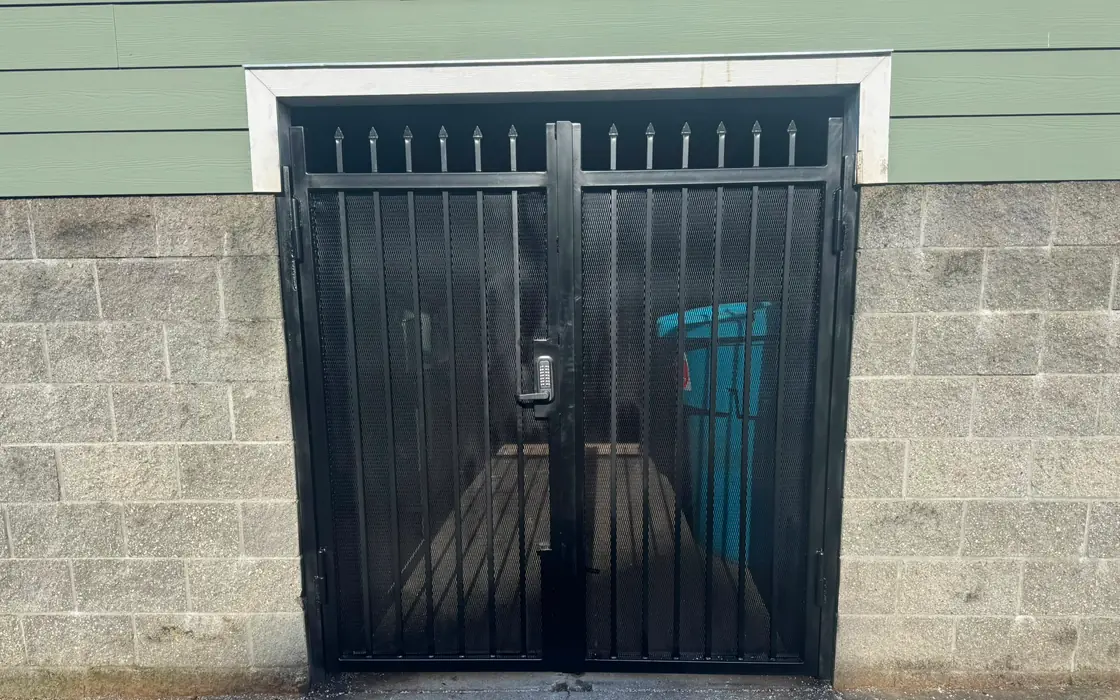
Down near the river by George Rogers Park and through Palisades and Westlake, the jobs lean toward ornamental ironwork and custom gates: low fences that frame a garden instead of hiding it, and driveway gates with openers tucked out of sight. Good iron work is mostly in the layout and the welds you never see. Ours are ground smooth, primed, and finish-coated before the pieces leave the shop.
Fence Heights and Permits Under City Code
The residential standard in Lake Oswego allows fences up to six feet, anything over seven feet needs a building permit, and there is a rule that catches people off guard: within ten feet of a property line that abuts a street or a shared access easement, four feet is the ceiling. That last one matters on corner lots and flag-lot driveways all over town. We design around these limits from the first sketch, and because codes get amended and rules change, we confirm current requirements with the city as part of every quote.
Fence and gate services in Lake Oswego
- Cedar Fence Installation in Lake Oswego · Western red cedar privacy and picket fences, built post-by-post for Northwest weather.
- Vinyl Fence Installation in Lake Oswego · Low-maintenance vinyl privacy and picket fencing that won't need staining, ever.
- Ornamental Iron Fencing in Lake Oswego · Wrought-iron-style steel and aluminum fencing: security and curb appeal that lasts decades.
- Chain Link Fencing in Lake Oswego · Galvanized and vinyl-coated chain link for yards, kennels, and commercial perimeters.
- Custom Driveway & Yard Gates in Lake Oswego · Driveway, garden, and side-yard gates built to match your fence and hung to swing true.
- Fence Repair & Replacement in Lake Oswego · Storm damage, leaning posts, and rotten sections, repaired or replaced honestly.
Good to know
Fencing in Lake Oswego: common questions
Will the Mountain Park association need to approve my fence?
Expect a review. The association there has overseen exterior changes since the neighborhood was master-planned in the 1970s, and several other enclaves in town run their own architectural committees. We prepare the drawings, material samples, and site plan the reviewers ask for, and we build exactly what got approved. It adds a step, not a headache, when the paperwork is right the first time.
Can you build a fence without hurting my trees?
That is normal work here. The city protects significant trees and so do most owners, so we hand-dig footings inside root zones, shift post spacing to miss structural roots, and use shorter spans where a tree owns the ground. If a trunk sits right on the line, we will detail the fence to meet it cleanly on both sides rather than crowd it.
What does quality fencing cost here?
More than a rushed job and less than doing it twice. Honest answer: wooded terrain, slopes, tree protection, and finish expectations all shape the number, so we will not guess without walking the property. The estimate itself is free, itemized down to hardware, and holds once we shake on it. If a design pushes cost without adding function or durability, we will point that out too.
What are the fence height rules in town?
Six feet is the usual residential cap, and anything taller than seven takes a building permit. The rule people miss: near a boundary that fronts a street or shared driveway, the ten feet closest to that line is limited to four-foot fencing. It bites hardest on corner parcels and flag lots. We map your design against the current code during the free estimate.
We are near Oswego Lake. Does that change the fence design?
The lake itself is private, and waterfront parcels usually come with easements, view considerations, and neighbors near enough to see every board. We build cedar dressed on both sides and open ironwork that keeps sightlines to the water. Expect us to ask about easement language early, since a fence that lands on the wrong side of an easement is an expensive thing to move.
How do I keep moss off a fence in deep shade?
You slow it down rather than stop it. Under heavy canopy, like the lots bordering Tryon Creek, moss will find any horizontal surface, so we bevel top caps to shed water, keep boards clear of soil, and recommend a gentle wash every couple of years instead of pressure blasting that tears up the grain. Material choice matters most: iron and vinyl shrug off what wood absorbs.
Can you match a gate to an existing fence or house style?
That is half of what our shop does. We photograph and measure what exists, then build the gate to carry the same lines, board pattern, and hardware finish, whether it is a garden gate in a cottage hedge or a driveway gate with a hidden operator. A gate gets used a hundred times for every once the fence is touched, so we overbuild the hinges.
Under all these firs, how long until a new cedar fence is dry enough for stain?
Longer than on an open lot. Cedar generally needs a month of drying, often two, and the deep shade over Lake Grove parcels stretches that timeline, so we tell owners to test late rather than stain early. When the wood is ready, apply during dry weather and plan on renewing the finish periodically. If the gray suits your woods, unsealed cedar needs no coating and loses nothing structurally.
Decades of landscaping swallowed our property corners. How do we get an accurate line on a wooded lot?
Bring in a surveyor before we bring in an auger. On wooded parcels the recorded pins are usually still there under duff and groundcover, and a monument search that recovers them costs well under what re-surveying the boundary from scratch would. We set the fence to those markers or to a line both households identify; a contractor has no legal standing to declare where the boundary sits, and a fence past the line invites a demand to relocate it.
Would you rather wait for dry weather before replacing the run through our trees?
No need. Wet-season installs go on all winter, and the concrete is unaffected, since it hardens through hydration rather than air-drying. The one condition that changes our approach is cold holding under 40 degrees or so for days at a time, which this area rarely sees. Under your canopy, a January build finishes no differently than a July one, and the winter calendar typically has more room than spring's.
Planning a fence in Lake Oswego?
Free written estimates, honest advice on materials, and a crew that treats your property like its own. Call or send the details.