
Most of the housing stock here dates from the 1990s on, built in master-planned subdivisions climbing Mount Scott and Scouters Mountain. The first fences were built at the same time, and a lot of them were builder-grade: thin cedar pickets, posts set light, panels run flat across ground that drops eight feet from corner to corner. Those fences are reaching the end of their run all at once, and we replace them street by street.
Evergreen Gate & Fence Works builds for the ground Happy Valley sits on. We step panels down grades so the top line reads clean from the street, tie fence runs into retaining walls where terraces demand it, and set posts deep enough to hold on fill slopes. If your HOA has design standards, bring them to the estimate. We have worked to plenty of them and know what review boards in this part of Clackamas County expect.
At a glance
- Service area
- Happy Valley, Oregon (Clackamas County)
- Neighborhoods
- Rock Creek, Scouters Mountain, Eagle Landing, Sunnyside area
- Services here
- Cedar Fence Installation, Vinyl Fence Installation, Ornamental Iron Fencing, Chain Link Fencing, Custom Driveway & Yard Gates, Fence Repair & Replacement
- Estimates
- Free and in writing, after a scheduled walk-through
- Call or text
- (971) 451-2304 (Oregon line)
How We Handle the Grade on Mount Scott's Slopes
On a hillside lot you have two honest options. Stepped panels hold each section level and drop in even increments, which suits view lots where the fence line shows from below. Raked panels follow the ground, which keeps gaps closed at the bottom, a point that matters if you are containing a dog. We walk the line with a level before quoting and tell you which one fits your grade, or where the run should switch from one to the other.
Terraced yards bring a second question: what sits on the retaining wall. Setting fence posts into or behind a wall without cracking it takes planning, core-mounted posts or offset footings depending on the wall's construction. We have done both across Rock Creek and Eagle Landing, and we will say straight out which your wall can take.
Builder-Grade Fences Are Coming Due in the Subdivisions
Whole streets near the Sunnyside area and up toward Scouters Mountain got their fences in the same season, from the same production builder, and they are failing on the same schedule: leaning posts, rails pulling off, gates dragging. Replacing one of those runs is a chance to fix what the original crew skipped. We set posts in proper footings, hold the boards an inch or two off the soil so they stop wicking water, and cap the rails.
HOA approval is the other half of the job here. Most associations ask for a drawing, a list of materials, and sometimes a stain color before work starts. We put together that packet as part of the estimate so the approval does not stall your project.
Fence Height and Permit Rules in Happy Valley
The city allows fences up to 4 feet tall in front of the home, or within 30 feet of the front property line, and up to 8 feet beside and behind it. A building permit kicks in at 7 feet and taller, which comes up on sloped lots where a wall and fence stack together. Corners and driveways carry vision clearance limits so drivers can see cross traffic. Rules change, we confirm current requirements as part of every quote.
Fence and gate services in Happy Valley
- Cedar Fence Installation in Happy Valley · Western red cedar privacy and picket fences, built post-by-post for Northwest weather.
- Vinyl Fence Installation in Happy Valley · Low-maintenance vinyl privacy and picket fencing that won't need staining, ever.
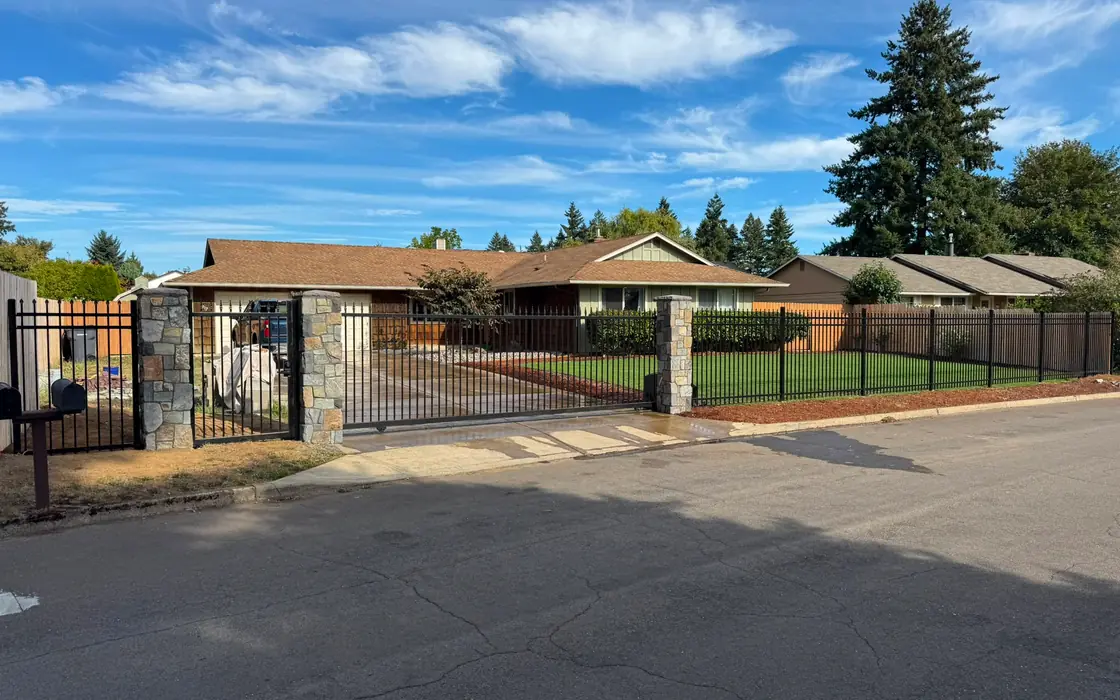
- Ornamental Iron Fencing in Happy Valley · Wrought-iron-style steel and aluminum fencing: security and curb appeal that lasts decades.
- Chain Link Fencing in Happy Valley · Galvanized and vinyl-coated chain link for yards, kennels, and commercial perimeters.
- Custom Driveway & Yard Gates in Happy Valley · Driveway, garden, and side-yard gates built to match your fence and hung to swing true.
- Fence Repair & Replacement in Happy Valley · Storm damage, leaning posts, and rotten sections, repaired or replaced honestly.