
Most of the fences we tear out on the inner east side went in decades ago, on lots that run about 5,000 square feet. That puts your fence close to the house, close to the neighbor, and under mature street trees that keep it damp from October into May. We build cedar, vinyl, ornamental iron, and chain link for those exact conditions: posts set deep in concrete, boards held off the ground line, and hardware that can live in a wet climate.
Evergreen Gate & Fence Works treats Portland as home territory rather than the far end of a service map. We handle full replacements, section repairs after a limb comes down, custom gates for narrow side yards, and automatic openers for driveways from St. Johns to Multnomah Village. Estimates are free, and we are licensed, bonded, and insured in Oregon and Washington.
At a glance
- Service area
- Portland, Oregon (Multnomah County)
- Neighborhoods
- Laurelhurst, Sellwood-Moreland, St. Johns, Alberta Arts District, Montavilla, Multnomah Village
- Services here
- Cedar Fence Installation, Vinyl Fence Installation, Ornamental Iron Fencing, Chain Link Fencing, Custom Driveway & Yard Gates, Fence Repair & Replacement
- Estimates
- Free and in writing, after a scheduled walk-through
- Call or text
- (971) 451-2304 (Oregon line)
Why Fences Rot Faster Under Mature Canopy
A fence in full sun dries out between storms. A fence under a big-leaf maple in Laurelhurst does not. Shaded lots hold moisture at the ground line all winter, moss takes the north face of the boards, and unrated posts wick water until they crumble at grade. The canopy that makes these blocks feel like an extension of Forest Park is the same canopy that shortens a fence's life, so we counter it: posts rated for burial, gravel under each one so water drains away, and a deliberate gap between the bottom boards and the soil. On the slopes around Mt. Tabor and in the West Hills, panels get stepped or racked to track the hillside without leaving crawl-under gaps, and we size footings for the downhill pull a hillside puts on every post.
Old Bungalows, Tight Lots, Shared Property Lines
The Craftsman and foursquare blocks between the river and 82nd were mostly fenced once, decades back, and much of that first generation of cedar is past saving. Replacing it on a compact lot takes more care than the original build did: property pins matter when the neighbor's garden bed sits a foot away, and a good-neighbor design with alternating rails keeps both sides of the line happy with the view. In Sellwood-Moreland and the Alberta Arts District we work around mature root systems, hand-digging where an auger would tear up a tree the whole street values. Farther east, mid-century ranch neighborhoods like Montavilla give us longer runs and room for wider driveway gates, including automatic openers where a corner lot meets a busy street.
Permit Rules Before You Dig
Portland does not require a building permit for wood fences up to 7 feet, which covers nearly every backyard project we take on. The catch is out front: zoning generally caps fences in the front setback at about 3.5 feet, so a tall privacy screen along the sidewalk is usually off the table without rethinking the layout. Corner lots and overlay zones add wrinkles of their own. Rules change, we confirm current requirements with the city as part of every quote.
Fence and gate services in Portland
- Cedar Fence Installation in Portland · Western red cedar privacy and picket fences, built post-by-post for Northwest weather.
- Vinyl Fence Installation in Portland · Low-maintenance vinyl privacy and picket fencing that won't need staining, ever.
- Ornamental Iron Fencing in Portland · Wrought-iron-style steel and aluminum fencing: security and curb appeal that lasts decades.
- Chain Link Fencing in Portland · Galvanized and vinyl-coated chain link for yards, kennels, and commercial perimeters.
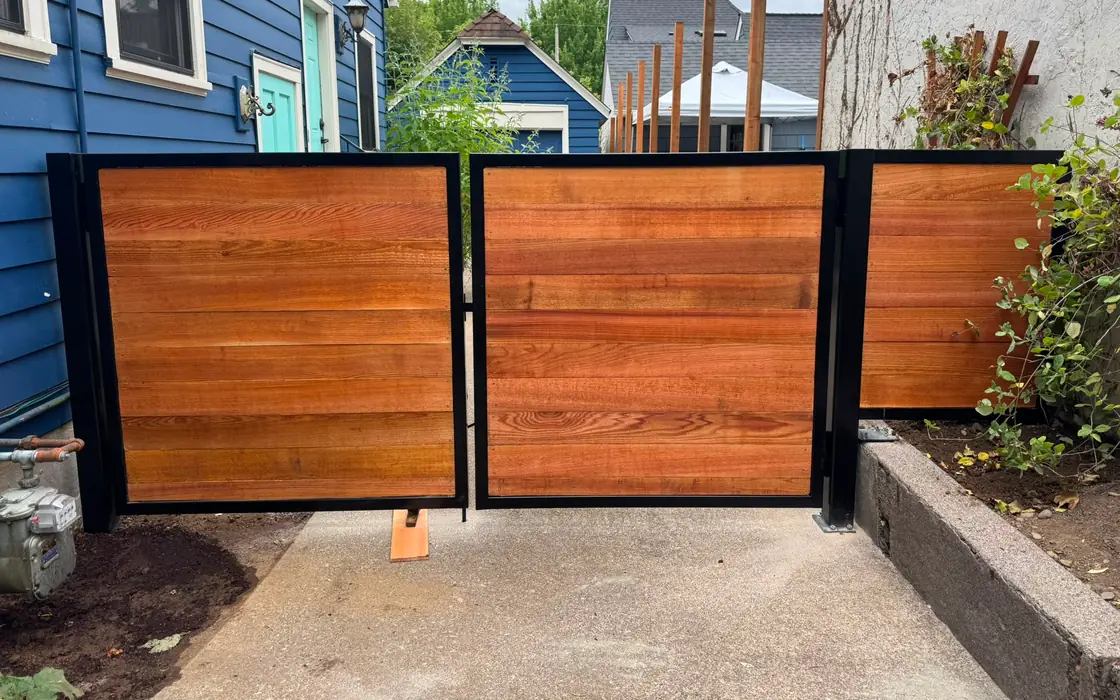
- Custom Driveway & Yard Gates in Portland · Driveway, garden, and side-yard gates built to match your fence and hung to swing true.
- Fence Repair & Replacement in Portland · Storm damage, leaning posts, and rotten sections, repaired or replaced honestly.