
Tualatin grew in rings: 1970s and 80s subdivisions near the middle, 1990s plats across Ibach, newer streets in Riverpark, and bigger wooded lots out east where the ground starts to roll. Each ring fences differently. The older tracts are on a second or third fence, the 90s HOA streets need panels that match the neighbors, and the semi-rural east side wants field fence, sturdy corner bracing, and gates wide enough for a trailer.
We install cedar privacy fences, vinyl, ornamental iron, chain link, and farm and ranch fencing, plus custom gate work, automatic openers, and repairs on fences we did not build. We are licensed, bonded, and insured in Oregon and Washington, and Tualatin is an easy drive for our crews. Estimates are free and carry no obligation. Call (971) 451-2304 and one of us will walk the fence line with you.
At a glance
- Service area
- Tualatin, Oregon (Washington County)
- Neighborhoods
- Ibach, Byrom, Riverpark, Martinazzi Woods, Midwest, East Tualatin
- Services here
- Cedar Fence Installation, Vinyl Fence Installation, Ornamental Iron Fencing, Chain Link Fencing, Custom Driveway & Yard Gates, Fence Repair & Replacement
- Estimates
- Free and in writing, after a scheduled walk-through
- Call or text
- (971) 451-2304 (Oregon line)
Wet Ground Along Hedges Creek and the River
The north edge along the river and the Hedges Creek wetlands on the west side stay wet long after the rain quits. Browns Ferry Park floods in a hard winter, and yards backing those low spots hold water into spring. Ground like that kills posts from the bottom up: rot starts at grade, the post loosens, the panel leans. We build against it. Posts go deeper than the standard set, concrete gets crowned so water sheds away from the wood, and boards stop shy of the soil so they can dry between storms. Across the flats through Midwest and Byrom the digging is friendlier, but drainage still varies lot to lot, and we check it before quoting rather than guess. If a section heaved loose in a wet year, we can straighten and repair the run without replacing all of it.
Ibach Plats, HOA Streets, and Acreage Toward Stafford Road
The 1990s plats on the south side run thick with HOAs, and most subdivisions built after 1990 carry fence language on height, style, and stain. We work from the CC&Rs so the finished fence matches the approval instead of a guess at it. Head east and the lots get bigger, the trees get older, and the terrain picks up slope toward the county line. Wooded acreage and the occasional horse property call for woven-wire field fence or board rail, corner bracing that holds tension, and drive gates sized for a trailer. On sloped runs we step or rack panels to follow grade rather than leaving triangle gaps at the bottom, and the long private drives out that way are where an automatic opener earns its keep.
Permits and Height Rules Here
Tualatin keeps fence permitting light: a permit applies only to fences over seven feet, which puts nearly every residential project below the line. Two things still bind everywhere: stay out of the public right-of-way, and keep corner lots clear of the vision triangle so drivers can see cross traffic. Numeric front-yard and corner height caps vary by zone here, so we verify those with the planning department for your specific lot before finalizing layout. Rules change, we confirm current requirements with the city as part of every quote.
Fence and gate services in Tualatin
- Cedar Fence Installation in Tualatin · Western red cedar privacy and picket fences, built post-by-post for Northwest weather.
- Vinyl Fence Installation in Tualatin · Low-maintenance vinyl privacy and picket fencing that won't need staining, ever.
- Ornamental Iron Fencing in Tualatin · Wrought-iron-style steel and aluminum fencing: security and curb appeal that lasts decades.
- Chain Link Fencing in Tualatin · Galvanized and vinyl-coated chain link for yards, kennels, and commercial perimeters.
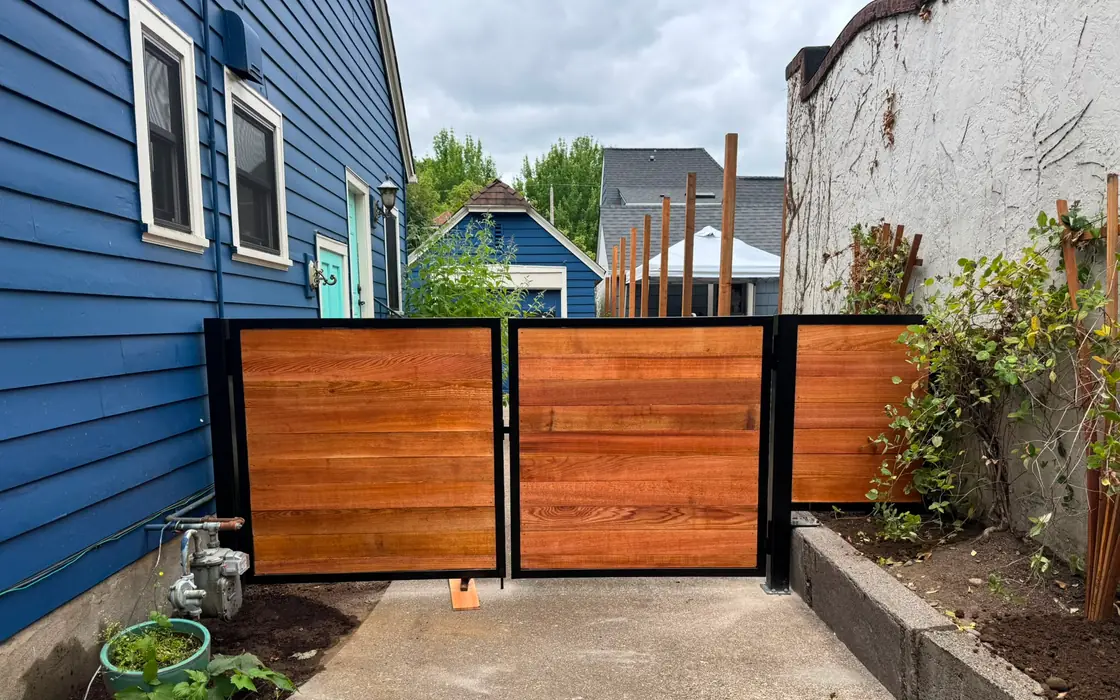
- Custom Driveway & Yard Gates in Tualatin · Driveway, garden, and side-yard gates built to match your fence and hung to swing true.
- Fence Repair & Replacement in Tualatin · Storm damage, leaning posts, and rotten sections, repaired or replaced honestly.