
Evergreen Gate & Fence Works builds fences and gates across Sandy and the surrounding communities, from the newer subdivisions on Sandy Bluff to the older homes near Proctor Boulevard downtown. We handle cedar, vinyl, ornamental iron, chain link, and farm fencing, plus custom gates, automatic openers, and repairs when an existing line has started to lean. The estimate is free, and it comes with a straight answer about what your lot needs.
We are licensed, bonded, and insured in Oregon and Washington. We set every job up to last. Fair prices for work done right is the whole idea: posts to the correct depth, gaps at the ground line, hardware that survives a wet winter. Own acreage out toward Firwood or Dover? We run field fence and horse-safe line the same way, level and tight, with gates that swing true years later.
At a glance
- Service area
- Sandy, Oregon (Clackamas County)
- Neighborhoods
- Sandy Bluff, Downtown Sandy, Kelso, Firwood, Dover
- Services here
- Cedar Fence Installation, Vinyl Fence Installation, Ornamental Iron Fencing, Chain Link Fencing, Custom Driveway & Yard Gates, Fence Repair & Replacement
- Estimates
- Free and in writing, after a scheduled walk-through
- Call or text
- (971) 451-2304 (Oregon line)
Sloped lots and the drop toward the river canyon
North-side lots near the river canyon fall away fast, and a fence line that ignores the grade looks wrong within a season. We step the panels down the slope so the top rail stays level while the bottom follows the ground, and we set posts deeper on the downhill side where soil moves. On a clear day the Jonsrud Viewpoint shows how far the land falls toward the water, which is the same drop your back fence has to handle.
Grade is only half of it. Runoff on these hillsides pushes soil against the base of a fence all winter, so we hold a gap where the pickets meet the dirt and gravel the post holes for drainage. Cedar and ornamental iron both hold up here when the base is right. Get the base wrong and cedar wicks water at the bottom rail while iron traps debris and rusts. We build the base first.
Downtown blocks, newer subdivisions, and acreage past the growth boundary
The housing splits three ways here. The oldest houses cluster along Proctor Boulevard on tight in-town lots where a cedar privacy fence or a short ornamental iron line has to match a hundred-year-old streetscape and clear a 4-foot front-yard limit. The 1990s-through-2020s subdivisions on the south side and the north-end developments often sit inside an HOA, so panel style, color, and height get reviewed before the first post goes in. We build to those specs and keep the paperwork clean.
Past the urban growth boundary toward Kelso, Firwood, and Cherryville, the lots turn into hobby farms and horse property. That calls for no-climb mesh for horses, high-tensile line for larger pastures, chain link for dog runs, and wide gates a truck or trailer can clear. Same crew and standards, whether it is a small city backyard or several hundred feet of pasture.
Height limits, corner clear-vision, and when a permit kicks in
The city's development code keeps front-yard fences to 4 feet and allows 6 feet along a side or rear that abuts a public right-of-way, 8 feet where those lines meet another lot. Corner lots have a 30-inch cap inside the clear-vision triangle so drivers can see. You only need a building permit once a fence tops 7 feet, which most residential work never reaches. We handle the height math against your setbacks before the first hole. Rules change, we confirm current requirements with the city as part of every quote.
Fence and gate services in Sandy
- Cedar Fence Installation in Sandy · Western red cedar privacy and picket fences, built post-by-post for Northwest weather.
- Vinyl Fence Installation in Sandy · Low-maintenance vinyl privacy and picket fencing that won't need staining, ever.
- Ornamental Iron Fencing in Sandy · Wrought-iron-style steel and aluminum fencing: security and curb appeal that lasts decades.
- Chain Link Fencing in Sandy · Galvanized and vinyl-coated chain link for yards, kennels, and commercial perimeters.
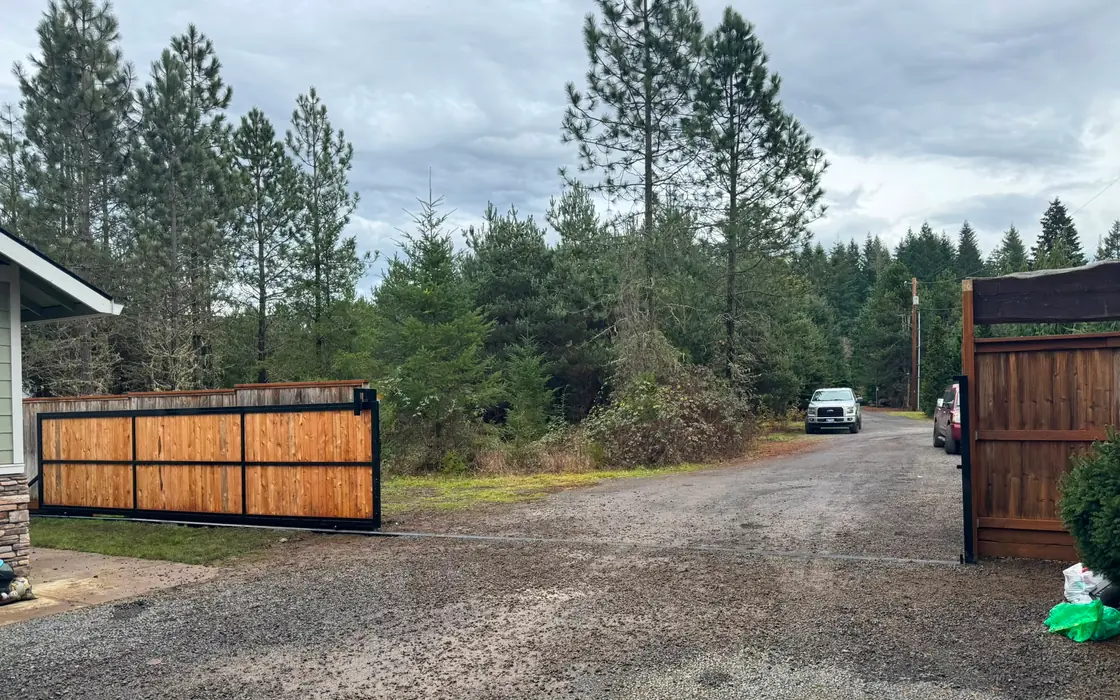
- Custom Driveway & Yard Gates in Sandy · Driveway, garden, and side-yard gates built to match your fence and hung to swing true.
- Fence Repair & Replacement in Sandy · Storm damage, leaning posts, and rotten sections, repaired or replaced honestly.