
One Species, Ten Decades of Housing
The oldest blocks in town were platted when fences were built from whatever the mill had on hand, and the lines back there show it: posts sistered onto stumps of older posts, boundaries that wandered an inch a decade. Replacing cedar on those lots starts with a little archaeology, clearing generations of buried footings and confirming the line before anything new goes vertical. The newer plats east and north are the opposite job: crisp boundaries, undisturbed soil, and a challenge that is mostly coordination, since a shared line usually means two households, two budgets, and one build date.
Either way the wood gets the same respect: posts sunk well past the rot depth, rails sized to their span, and boards fastened so seasonal movement never splits them at the screw.
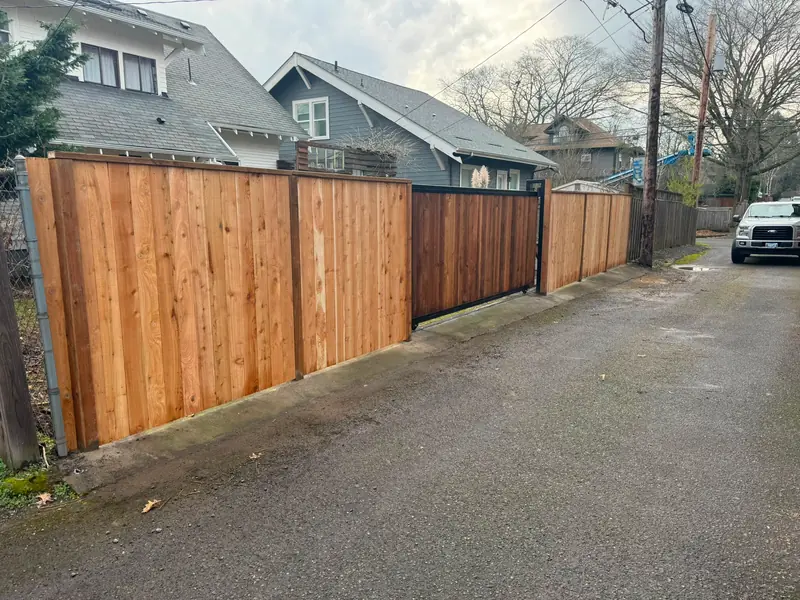
Permits and the Tax Line, With No Surprises
Fence rules on the Washington side are friendlier than people expect. Along the back and side lines you can run six feet of privacy fence with no paperwork, and out front the ceiling sits at four feet, which still covers a classic picket without a single form. Corners near driveways carry sightline rules, and we lay the fence out around them during the site visit.
The part that startles Oregon transplants is the tax. Washington charges sales tax on fence work, lumber and labor alike, so a bid over here reads higher than an identical bid across the bridge. Ours shows that amount as its own entry, so you can compare contractors honestly. If a bid you are holding lists no tax at all, the number is not smaller. It is incomplete.
What Comes Standard on a North-Bank Cedar Job
Every quote gets written after we walk the line in person, and it holds once you sign. Our crews cross the bridge daily, so scheduling runs like any Oregon job: one visit to set posts, a pause while the concrete hardens, another to hang boards and gates. Tear-out of the old fence folds into the same schedule.
- Cedar or ground-rated posts under red cedar boards
- Footings poured to suit the soil on your street
- Fasteners that never streak the boards
- Sales tax itemized, never buried in the footage price
- Old material removed and recycled where possible
- A workmanship warranty in writing
Want the deeper dive? Read our full cedar fence installation page, or see everything we build on our Vancouver fence company page.