
Evergreen Gate & Fence Works serves La Center from the old-town blocks on E 4th Street down to the newer subdivisions spreading north and west, and out along the Timmen Road corridor where lots turn to acreage. A city of about 4,000 keeps its character partly through its fences: picket and iron in the historic core above the river, cedar on the HOA plats expanding north, field wire and stout gates on the hobby farms at the edges.
We install every major fence type here, cedar and vinyl for yards, chain link and ornamental iron for security, plus custom gates and automatic openers for driveways long and short. Our crews come up I-5 from Portland, licensed, bonded, and insured for Washington work, and the drive is short enough that scheduling stays predictable. The estimate costs nothing, and the estimator who walks your line is a builder, not a salesman.
At a glance
- Service area
- La Center, Washington (Clark County)
- Neighborhoods
- Downtown, Lockwood Creek Road area, Timmen Road corridor, Paradise Point, La Center Junction
- Services here
- Cedar Fence Installation, Vinyl Fence Installation, Ornamental Iron Fencing, Chain Link Fencing, Custom Driveway & Yard Gates, Fence Repair & Replacement
- Estimates
- Free and in writing, after a scheduled walk-through
- Call or text
- (971) 405-7863 (Washington line)
Wind and Slope Above the East Fork
Downtown sits on a bluff over the East Fork Lewis River, and lots along that edge deal with two forces at once: grade falling away toward the water and wind moving up the open valley. On these sites we shorten post spacing, deepen footings, and often recommend designs with some air passage, spaced pickets or slatted horizontal styles, so a gust loads the posts less than a solid panel would. Down in the Bottoms, where the wetlands spread below town, saturated ground changes how footings behave and we plan for it.
Slope work follows the same discipline as anywhere: rack what can be racked, step what cannot, and keep the top line looking intentional from the street.
Horse Properties and Hobby Farms Past the City Line
Step outside the municipal boundary near Paradise Point or along the roads toward the Junction and the rules change with the jurisdiction: Clark County standards apply, and so does a different kind of fencing. We build farm and ranch fencing for these parcels, woven field wire on treated posts, board fence for horse paddocks where visibility and safety matter, and heavy-duty gates sized for trucks, trailers, and tractors. For horses specifically we avoid materials that punish an animal that leans on or kicks the fence, and we talk through layout so pastures rotate sensibly.
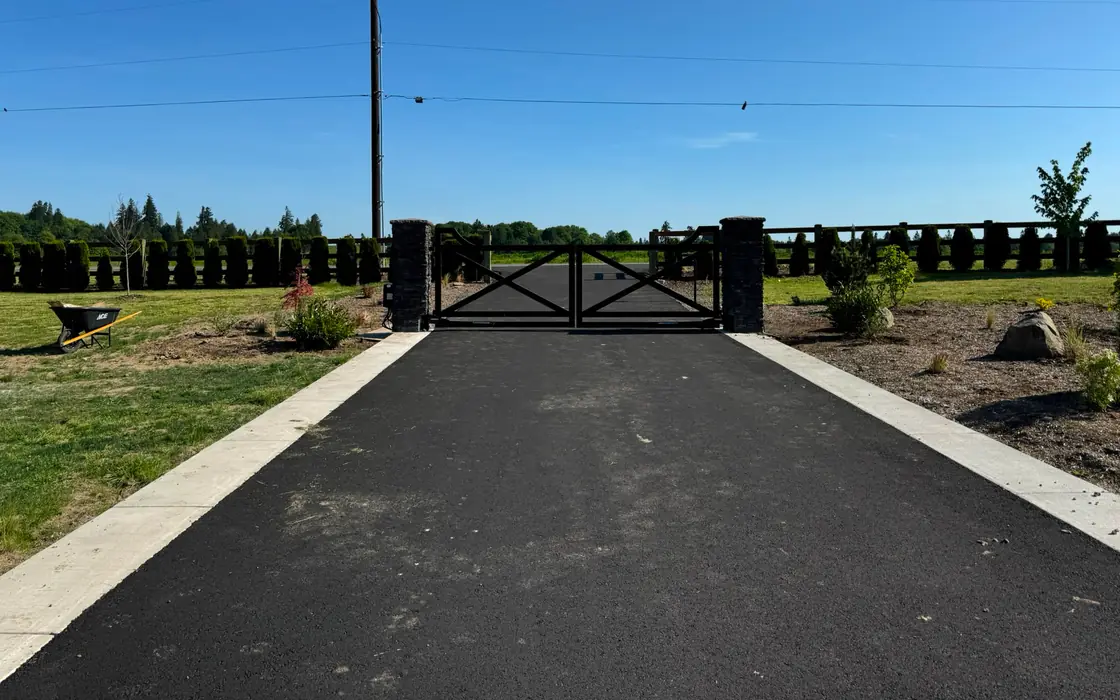
Openers earn their keep on long driveways in this country. We match operator strength to gate weight and figure out the power run on the first walk of the property, not afterward.
Heights and Materials Under City Code
Inside city limits, LCMC 18.245.020 sets the numbers: 6 feet maximum on side, street-side, and rear lines, 4 feet in the front yard, with sight-distance standards at corners. The code also bans certain materials outright, including fiberglass or plastic sheeting, barbed wire, and razor ribbon; a barbed-wire top is allowed only on a 6-foot commercial or industrial fence. Whether a given project needs a city permit is something we verify with staff before work begins. Rules change, we confirm current requirements as part of every quote.
Fence and gate services in La Center
- Cedar Fence Installation in La Center · Western red cedar privacy and picket fences, built post-by-post for Northwest weather.
- Vinyl Fence Installation in La Center · Low-maintenance vinyl privacy and picket fencing that won't need staining, ever.
- Ornamental Iron Fencing in La Center · Wrought-iron-style steel and aluminum fencing: security and curb appeal that lasts decades.
- Chain Link Fencing in La Center · Galvanized and vinyl-coated chain link for yards, kennels, and commercial perimeters.
- Custom Driveway & Yard Gates in La Center · Driveway, garden, and side-yard gates built to match your fence and hung to swing true.
- Fence Repair & Replacement in La Center · Storm damage, leaning posts, and rotten sections, repaired or replaced honestly.