
The bungalows, cottages, and ranches here date from the 1920s through the 1950s, and plenty of their fences are original or close to it. That makes this a replacement market: we spend our time pulling rotted posts out of old concrete, correcting lines that wandered over the decades, and building new cedar, vinyl, and ornamental iron that respects what these older blocks look like.
Mature trees are the defining condition. They give Milwaukie its character, and they keep fence lines shaded and damp for half the year, which is exactly how untreated wood fails at the ground. Our answer is drainage under every post, rated material wherever wood touches soil, and airflow at the bottom of each panel. We also handle gate repair and automatic openers, and every estimate is written after a walk of the property, not from a satellite photo.
At a glance
- Service area
- Milwaukie, Oregon (Clackamas County)
- Neighborhoods
- Ardenwald-Johnson Creek, Island Station, Historic Milwaukie Downtown, Lake Road, Linwood, Lewelling
- Services here
- Cedar Fence Installation, Vinyl Fence Installation, Ornamental Iron Fencing, Chain Link Fencing, Custom Driveway & Yard Gates, Fence Repair & Replacement
- Estimates
- Free and in writing, after a scheduled walk-through
- Call or text
- (971) 451-2304 (Oregon line)
Shade, Moisture, and the Johnson Creek Low Ground
Tree canopy is the first thing we account for on any job in this town. Fence lines under mature dogwoods, firs, and maples stay wet from the first fall rain until well into spring, and the failure point is nearly always where the post meets the soil. We set posts on gravel so water has somewhere to go, use ground-rated material at grade, and keep boards up off the dirt. Along the north edge near Johnson Creek, the floodplain adds standing water in wet years, so posts there get detailed for saturation: plan the drainage, choose hardware that will not streak rust down the boards by the third winter, and assume the ground stays soggy longer than the forecast says.
A Replacement Market, Not a New-Construction Market
Nobody is platting new subdivisions inside these city limits, so nearly every fence we build replaces one that already stood. That shapes the work. In Ardenwald and Lewelling we dig out 70-year-old concrete footings before setting anything new. On Island Station and Lake Road lots, decades of settling mean the old fence line and the legal line do not always agree, so we verify before we build rather than inheriting the last builder's guess. And because these blocks share a consistent older character, we talk through board patterns, cap details, and gate hardware that belong on a 1940s cottage instead of fighting it. Downtown storefronts and small commercial yards get the same care with heavier-duty materials.
Height Limits on the Clackamas County Side
Milwaukie's municipal code caps side and rear fences at 6 feet, which is worth knowing before you plan a full-height privacy line along the back. Street-facing yards are capped lower, at 42 inches under the same code title, and permit thresholds depend on the specifics of the lot, so we treat those as questions to answer for your property rather than assumptions to build on. Rules change, we confirm current requirements with the city as part of every quote.
Fence and gate services in Milwaukie
- Cedar Fence Installation in Milwaukie · Western red cedar privacy and picket fences, built post-by-post for Northwest weather.
- Vinyl Fence Installation in Milwaukie · Low-maintenance vinyl privacy and picket fencing that won't need staining, ever.
- Ornamental Iron Fencing in Milwaukie · Wrought-iron-style steel and aluminum fencing: security and curb appeal that lasts decades.
- Chain Link Fencing in Milwaukie · Galvanized and vinyl-coated chain link for yards, kennels, and commercial perimeters.
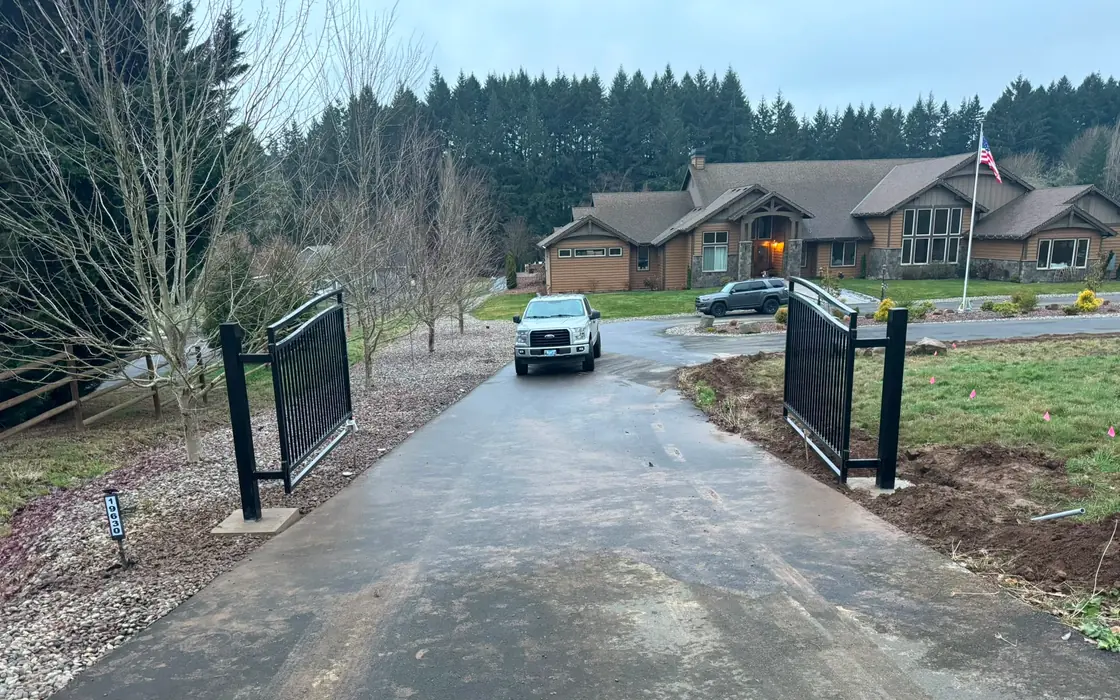
- Custom Driveway & Yard Gates in Milwaukie · Driveway, garden, and side-yard gates built to match your fence and hung to swing true.
- Fence Repair & Replacement in Milwaukie · Storm damage, leaning posts, and rotten sections, repaired or replaced honestly.