
Evergreen Gate & Fence Works handles fence and gate jobs throughout Newberg, from the historic homes around Old Town and the university out to the subdivisions spreading north and up the rural hills toward the vineyards. We work out of a Portland shop, licensed and bonded for Oregon work, and the estimate comes from a builder who walks the property, not a rep reading prices off a sheet.
This is wine country, and the fencing follows the land use: privacy cedar and vinyl in town, tall woven-wire deer fence around vineyards and gardens, board and field fence on the hobby farms, and ornamental iron where an estate gate sets the tone. Several of the newer subdivisions carry HOA standards, and we build to them. We also hang custom gates, wire in automatic openers for long drives, and repair fences and gates the ridge wind has worked loose. Every estimate is free and itemized.
At a glance
- Service area
- Newberg, Oregon (Yamhill County)
- Neighborhoods
- Old Town Newberg, George Fox district, Springbrook, Chehalem Mountain, Bald Peak
- Services here
- Cedar Fence Installation, Vinyl Fence Installation, Ornamental Iron Fencing, Chain Link Fencing, Custom Driveway & Yard Gates, Fence Repair & Replacement
- Estimates
- Free and in writing, after a scheduled walk-through
- Call or text
- (971) 451-2304 (Oregon line)
Deer Pressure on Vineyard and Acreage Fencing
On the acreage up Chehalem Mountain and the parcels near the vineyards, the fence question is not privacy, it is keeping deer out of the vines and the garden. A standard six-foot fence does not do it; a determined deer clears that. For real exclusion we run seven or eight feet of woven wire or a purpose-built deer mesh, tension it against tall line posts, and brace the corners hard so the whole run stays tight for years. Where an owner wants the barrier to disappear into the landscape, black poly or wire mesh reads as almost invisible from a few yards off. Gates in these runs get built full height too, because a four-foot gate in an eight-foot fence is an open door for the herd.
Hillside Lots, Ridge Wind, and Creek Ravines
Fence work here splits between flat town lots and ground that moves. Up on the slopes and out toward Bald Peak, fence lines climb, so we rack cedar and wire to follow the grade or step a rigid material like vinyl where it will not flex, and we keep a clean top line the eye reads as intentional. The ridge takes wind that the valley floor never sees; solid privacy panels up there need deeper, stouter posts than the same fence would in town.
Water is the other factor. Lots that back to a creek ravine drain fast and hard in winter, so we hold the bottom board off the ground and study how runoff crosses the parcel before we set the first post. On the old streets near downtown and the university, mature trees and tight side yards mean hand-digging around roots instead of tearing up a yard that has looked the same for decades.
Heights and Permits Under the Development Code
Newberg's development code sets the heights: four feet in the front yard, up to seven feet on interior side and rear property lines. A building permit is required for a wood fence over seven feet, a masonry or concrete wall over four feet, chain-link or woven wire over eight feet, and any pool enclosure. That last one matters here, since a lot of deer and vineyard fence runs tall, and a poolside fence is a case unto itself. We pull the permit when the height calls for it. Rules change, we confirm current requirements with the city as part of every quote.
Fence and gate services in Newberg
- Cedar Fence Installation in Newberg · Western red cedar privacy and picket fences, built post-by-post for Northwest weather.
- Vinyl Fence Installation in Newberg · Low-maintenance vinyl privacy and picket fencing that won't need staining, ever.
- Ornamental Iron Fencing in Newberg · Wrought-iron-style steel and aluminum fencing: security and curb appeal that lasts decades.
- Chain Link Fencing in Newberg · Galvanized and vinyl-coated chain link for yards, kennels, and commercial perimeters.
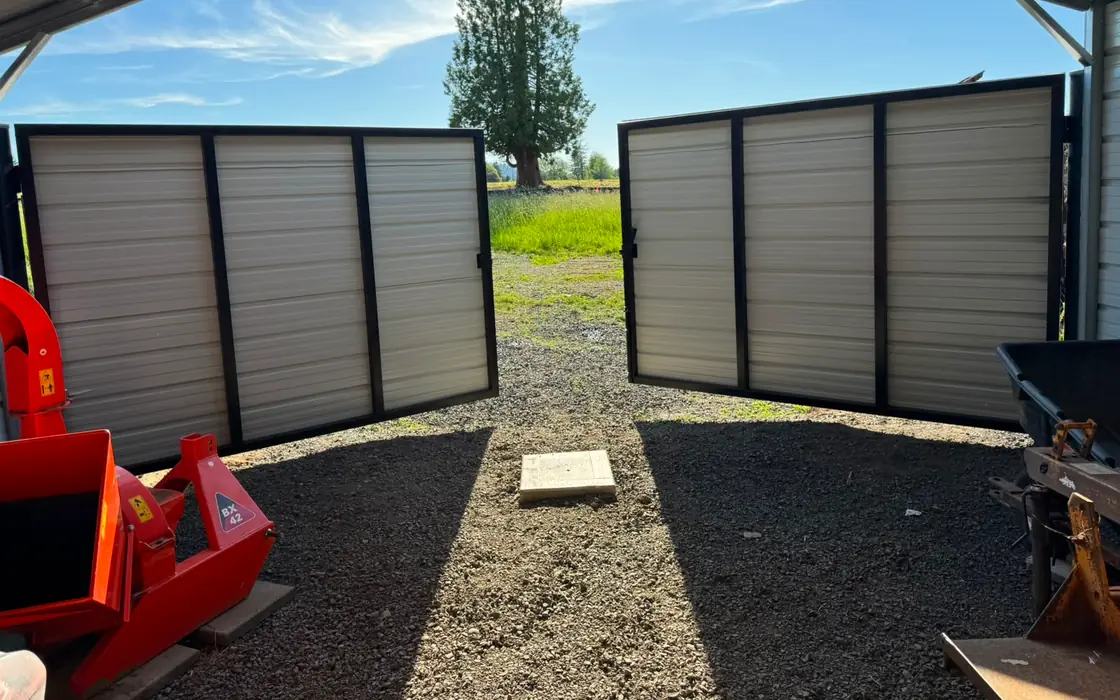
- Custom Driveway & Yard Gates in Newberg · Driveway, garden, and side-yard gates built to match your fence and hung to swing true.
- Fence Repair & Replacement in Newberg · Storm damage, leaning posts, and rotten sections, repaired or replaced honestly.