
Oregon City climbs from the river in distinct terraces, and the fencing changes with each step. Down near Willamette Falls, the McLoughlin and Canemah districts hold homes from the Victorian era and early 1900s, where a designated property means design review before a fence goes in and where a new build should not look bolted onto a century-old house. Up top, in Caufield and around Gaffney Lane, the work is modern subdivision fencing on newer lots.
We handle both ends. That means picket profiles and materials that pass review in the historic districts, and it means straight production work where a builder fence from the 1990s has run out of posts to lean on. Estimates are free, the license and bond cover Oregon and Washington both, and the person who measures your line is the one who answers your questions.
At a glance
- Service area
- Oregon City, Oregon (Clackamas County)
- Neighborhoods
- McLoughlin, Canemah, Park Place, South End, Barclay Hills, Caufield
- Services here
- Cedar Fence Installation, Vinyl Fence Installation, Ornamental Iron Fencing, Custom Driveway & Yard Gates, Gate Repair, Fence Repair & Replacement
- Estimates
- Free and in writing, after a scheduled walk-through
- Call or text
- (971) 451-2304 (Oregon line)
Design Review in McLoughlin and Canemah
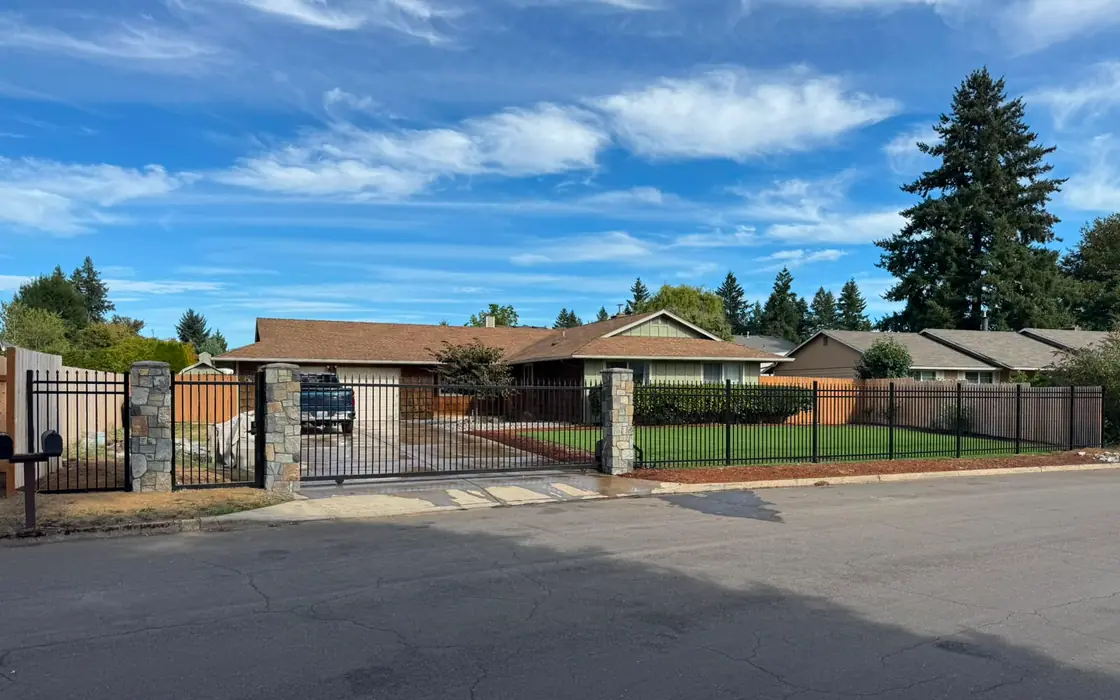
On a designated property, the city reviews a fence proposal before anything gets built, and the review goes smoother when the design respects the house behind it. We build wood picket and board fences with period profiles: square or gothic pickets, capped posts, gates hung on substantial iron hardware instead of zinc-plated strap hinges off a big-box shelf. Ornamental iron can be the right call on these blocks too, and we fabricate custom gates to complement existing ironwork where it survives.
Practically, we help assemble what reviewers ask for: dimensions, materials, a basic elevation sketch. Owners who arrive with a complete application tend to clear review without drama, and that prep is folded into how we quote historic work.
Bluff Lots, Legacy Fence Lines, and the Upper Terraces
The bluffs that made a municipal elevator necessary run through backyards too. Fences along the top of a slope need posts that reach past the loose fill at the edge, and sometimes the honest answer is to pull the line back a few feet from the break. On older lots around Park Place and the South End, we also inherit legacy fence lines: runs that wander off the true boundary because someone in 1962 followed a hedge instead of a survey. We flag those before building so you are not buying a dispute.
The upper subdivisions built after 1990 are a different job, straightforward cedar and vinyl replacements where the original builder fencing has aged out, plus new runs in Barclay Hills where yards were never fenced at all.
Fence Heights and Permits in Oregon City
The measurements that matter here: 42 inches is the ceiling for fences between the street and the front facade of the house, and 72 inches applies at the facade and behind it. Most residential fences need no permit at all. The exception is designated historic properties, where review is required before installation regardless of height. The city also restricts chain link as a residential fence material, and corner visibility and easements can shape a layout. Rules change, we confirm current requirements as part of every quote.
Fence and gate services in Oregon City
- Cedar Fence Installation in Oregon City · Western red cedar privacy and picket fences, built post-by-post for Northwest weather.
- Vinyl Fence Installation in Oregon City · Low-maintenance vinyl privacy and picket fencing that won't need staining, ever.
- Ornamental Iron Fencing in Oregon City · Wrought-iron-style steel and aluminum fencing: security and curb appeal that lasts decades.
- Custom Driveway & Yard Gates in Oregon City · Driveway, garden, and side-yard gates built to match your fence and hung to swing true.
- Gate Repair in Oregon City · Sagging, dragging, or dead gates fixed right: wood, iron, and automatic.
- Fence Repair & Replacement in Oregon City · Storm damage, leaning posts, and rotten sections, repaired or replaced honestly.