
Storage Yards, Frontages, and the Fence That Fits the Risk
A contractor's laydown yard off an industrial street and a leasing office on a landscaped corner need different fences, and pricing them the same wastes somebody's money. For yards holding tools and materials, we spec heavy fabric, bottom rails that defeat lift-unders, and gate hardware that resists bolt cutters, because the fence is the first line item in a loss-prevention budget. For frontages that tenants and customers judge, powder-coated steel picket earns its cost in curb presence and near-zero upkeep. Trash and utility enclosures get built to the screening rules the city applies to commercial parcels, sized for the hauler's truck and hinged to survive the daily slam. One walk of the site with your risk in mind, and the spec writes itself.
Built to Your Schedule, Documented to Your Standard
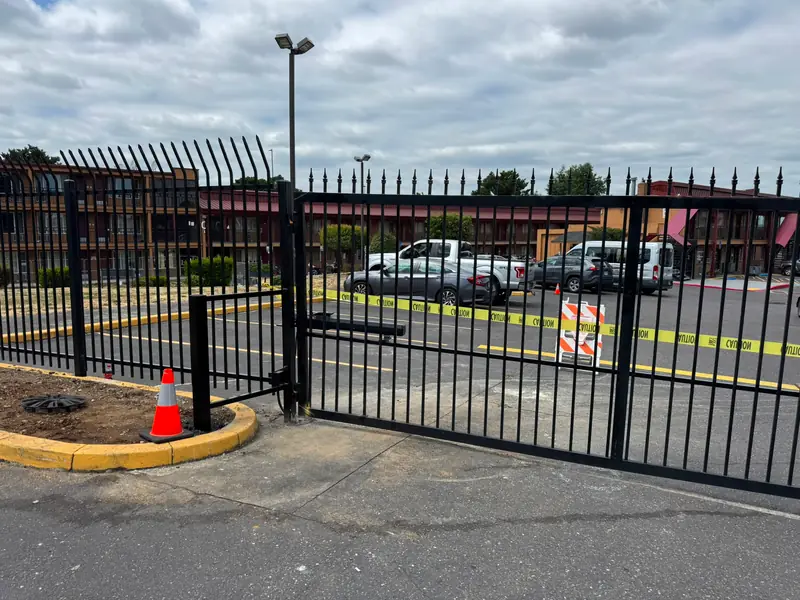
Commercial work runs on paperwork and sequencing as much as on posts. Certificates of insurance go to your office before anyone mobilizes, W-9s and lien releases follow the same clean routine, and our licensing is current in both states for portfolios that cross the river. On occupied properties we sequence the replacement so no stretch of the perimeter stands open at close of business, using temporary panels to bridge each phase. For general contractors, we bid from drawings, flag conflicts between the fence spec and the grading plan before they become change orders, and show up when the schedule says, because one late sub scrambles everyone behind him. You deal with a single project contact from bid to punch list.
How We Run a Commercial Job
Every commercial engagement follows the same documented path:
- Site walk or plan takeoff, whichever your project offers
- Itemized proposal with unit pricing that survives your approval cycle
- Insurance certificates, scheduling plan, and phasing map delivered up front
- Daily closeout that leaves the perimeter secured and the site broom-clean
- As-built notes and warranty terms in your file at completion
Managers who run multiple properties get one contact and consistent pricing across the portfolio, which is how repeat relationships start. If a deadline is fixed by an insurer, a lender, or an opening date, say so at the walk and we plan backward from it.
Want the deeper dive? Read our full commercial fencing page, or see everything we build on our Portland fence company page.