
West Linn rises from the Willamette on one side and the Tualatin on the other, which leaves few level backyards in between. From the early-1900s blocks of the Willamette historic district to hillside subdivisions in Hidden Springs and up toward Rosemont Summit, most fence lines here climb, turn, or terrace. That shapes everything we bid: post depth on slopes, panel stepping that keeps a clean top line, gates that swing true on ground that does not cooperate.
Expectations for finish work run high on these streets, and they should. We sweat the details that show from the sidewalk: even stepping down a grade, mitered cap rails, gate frames that stay square through wet winters, black hardware that suits an iron railing on the porch. Fair prices for that standard of work, explained in person and put in writing, that is the whole pitch.
At a glance
- Service area
- West Linn, Oregon (Clackamas County)
- Neighborhoods
- Willamette, Robinwood, Bolton, Hidden Springs, Rosemont Summit
- Services here
- Cedar Fence Installation, Vinyl Fence Installation, Ornamental Iron Fencing, Chain Link Fencing, Custom Driveway & Yard Gates, Fence Repair & Replacement
- Estimates
- Free and in writing, after a scheduled walk-through
- Call or text
- (971) 451-2304 (Oregon line)
Building on Slopes from Robinwood to Rosemont Summit
A stepped fence looks effortless when the increments are planned and clumsy when they are guessed. Before we quote a hillside run we shoot elevations along the line and lay out the steps so each drop is consistent, corners land level, and the gate does not end up at the bottom of a stair-step where it can never hang right. On steep sections we deepen and widen footings, since a fence on a grade carries load differently than one on flat ground.
Shade is the other local condition. Wooded lots near Mary S. Young Park and along the river hold moisture on the north side of every board. There we specify ground clearance, stainless or coated fasteners, and finishes that tolerate damp, because a fence that never fully dries needs different choices than one in open sun.
Old Willamette Craftsmanship, Hillside Subdivision Reality
The historic district near the falls overlook calls for fencing that defers to early-1900s houses: low pickets out front, board fences kept behind the front wall of the house, gates with some craft in them. A few streets uphill, the calculus changes to HOA color rules and matching the run your neighbor installed in 2004. Around Hidden Springs and Bolton we replace a steady stream of fences from the 1970s through the 1990s that were built to the standards of their decade and are done.
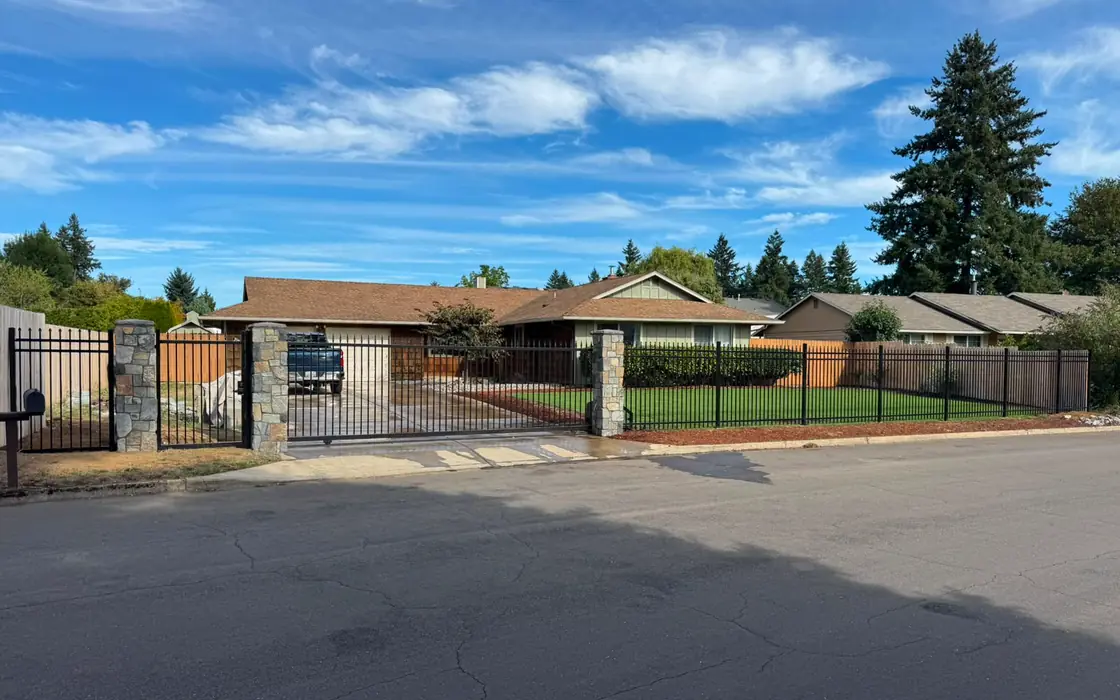
Iron work bridges both worlds here. A low ornamental fence suits a Craftsman porch and a modern hillside entry equally well, it survives shade that eats wood, and it preserves the view that half these lots were priced for.
Fence Rules Here: No Permit, but the Good Side Faces Out
No fence permit is required in this city, which surprises people moving in from Portland. The limits still bind: 3 feet maximum in the front yard, including the first 20 feet of the side property lines back from the front, and 6 feet on the sides and rear. One rule with teeth is written courtesy: the finished side of the fence must face the neighbor. We build that way everywhere as a matter of practice, here it is code. Rules change, we confirm current requirements as part of every quote.
Fence and gate services in West Linn
- Cedar Fence Installation in West Linn · Western red cedar privacy and picket fences, built post-by-post for Northwest weather.
- Vinyl Fence Installation in West Linn · Low-maintenance vinyl privacy and picket fencing that won't need staining, ever.
- Ornamental Iron Fencing in West Linn · Wrought-iron-style steel and aluminum fencing: security and curb appeal that lasts decades.
- Chain Link Fencing in West Linn · Galvanized and vinyl-coated chain link for yards, kennels, and commercial perimeters.
- Custom Driveway & Yard Gates in West Linn · Driveway, garden, and side-yard gates built to match your fence and hung to swing true.
- Fence Repair & Replacement in West Linn · Storm damage, leaning posts, and rotten sections, repaired or replaced honestly.