
Camas sits close enough to the Gorge that winter east wind is a design input, not a footnote. On Prune Hill the exposure arrives with slope, so panels step the grade and posts get set for both loads at once. Near the lake, moisture does the slow damage, and we spec ground-contact posts and keep wood up out of wet soil. Exposure, slope and water: most quotes here answer at least two of the three.
The town grew up around its paper mill, and the early-1900s houses near downtown deserve fences with tighter lines than a stock subdivision panel. We build cedar, vinyl and ornamental iron, plus custom gates with openers, and where covenants apply we work to the letter of the approval. Our crews are Portland-based, and we hold the Washington licenses, bonds and insurance the state requires. The estimate costs nothing and itemizes everything.
At a glance
- Service area
- Camas, Washington (Clark County)
- Neighborhoods
- Prune Hill, Lacamas Shores, Grass Valley, Downtown Camas
- Services here
- Cedar Fence Installation, Vinyl Fence Installation, Ornamental Iron Fencing, Chain Link Fencing, Custom Driveway & Yard Gates, Fence Repair & Replacement
- Estimates
- Free and in writing, after a scheduled walk-through
- Call or text
- (971) 405-7863 (Washington line)
East Wind Off the Gorge, and What It Does to Fences
The east wind here is not a storm event, it is a season. From late fall into February it can run for days, and a six-foot solid panel presents roughly fifty square feet of surface to every gust. We counter it three ways: deeper embedment than a standard residential set, closer spacing between posts on exposed runs, and panel styles that bleed pressure instead of holding it, open-spaced horizontals or lattice tops where privacy allows. Exposure varies block to block. On the leeward side of the hill it drops fast, so we walk the line before we quote rather than pricing the whole yard as if it faced the weather.
Hillside Lots, Lakeside Streets and Mill-Era Blocks
Lots up on the hill rarely give you a level run. Fences step down the grade, and where a retaining wall holds the slope, the fence above it has to be planned with the wall, structurally and legally, since combined heights count under city code. Around Lacamas Shores the enemy is water: soil that stays damp, sprinkler overspray, shade that never lets wood dry. We spec posts rated for ground contact and keep cedar boards clear of the soil. Down near the old paper mill, we scribe fences to grades that were set a century ago and rebuild lines that were staked before anyone alive can remember. Different problems, same standard: the fence should stand straight long after the neighbor's newer one has started to lean.
Camas Fence Rules: 42 Inches, Six Feet, and Grade
Front-yard fences top out at 42 inches under Title 18 of the municipal code, side and rear fences at six feet, and a building permit is required for anything taller. Height is measured from finished grade, which matters on sloped lots where grade itself takes judgment, and a fence stacked over a retaining wall counts toward a combined limit. We flag both issues during layout on hillside properties so nothing gets built twice. Rules change, we confirm current requirements with the city as part of every quote.
Fence and gate services in Camas
- Cedar Fence Installation in Camas · Western red cedar privacy and picket fences, built post-by-post for Northwest weather.
- Vinyl Fence Installation in Camas · Low-maintenance vinyl privacy and picket fencing that won't need staining, ever.
- Ornamental Iron Fencing in Camas · Wrought-iron-style steel and aluminum fencing: security and curb appeal that lasts decades.
- Chain Link Fencing in Camas · Galvanized and vinyl-coated chain link for yards, kennels, and commercial perimeters.
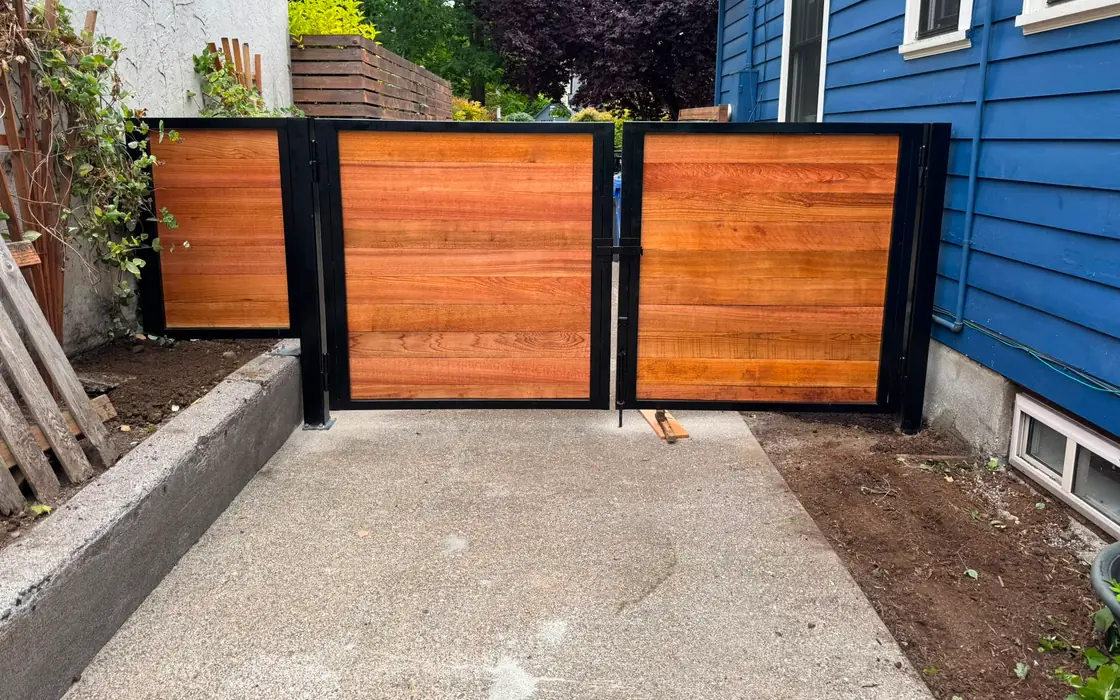
- Custom Driveway & Yard Gates in Camas · Driveway, garden, and side-yard gates built to match your fence and hung to swing true.
- Fence Repair & Replacement in Camas · Storm damage, leaning posts, and rotten sections, repaired or replaced honestly.