
Sizing an Operator for the Wind It Will Meet
On Prune Hill's view streets, an entry gate faces the same seasonal gusts that make builders rethink fence engineering, and the operator has to be chosen with that in mind. Wind pressure on a closed leaf works like a hand pushing mid-span, and a motor picked from the catalog's minimum column will strain, fault, and quit young. We spec above the gate's paper weight, add a maglock or mechanical stop that holds the leaf seated when the operator is at rest, and stiffen the gate frame itself so flexing never chews through hinge bearings. Where an entry takes weather head-on, we will say plainly if the smarter play is a different gate geometry rather than a bigger motor, because the fix should outlast the warranty.
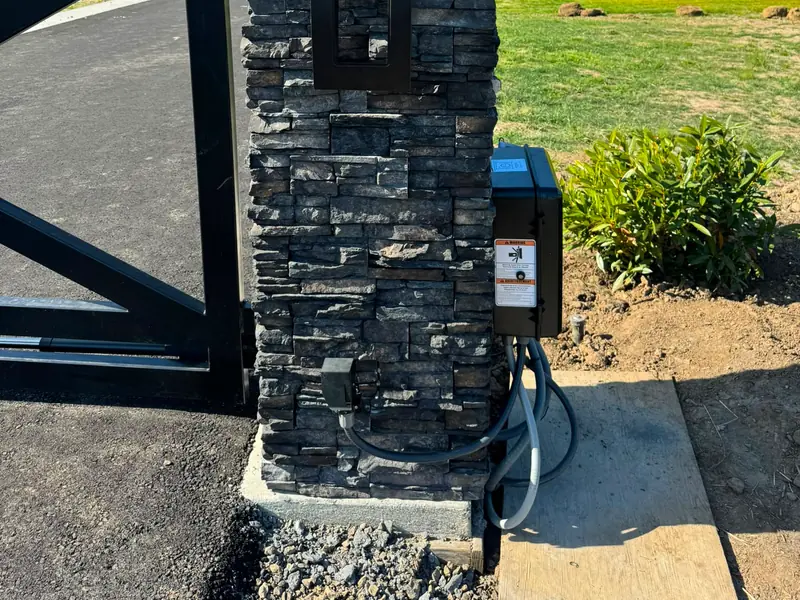
Safety Eyes First, Convenience Right Behind
Every operator we hang goes in with photo eyes the control board watches continuously, the arrangement UL 325 requires at entrapment points, and the system will not cycle in automatic mode unless those sensors report healthy. That matters on a family driveway more than anywhere: the gate stops and reverses before it ever reaches a bike left in the path. Access is the enjoyable part. A keypad at the entry gives each driver in the house a personal code, the app opens the gate from a phone anywhere with signal, and temporary codes handle the pet sitter or a weekend contractor without giving away the keys. Remotes still ride in the cars for the people who prefer a button. We set all of it up before we leave and show everyone how it works.
What an Opener Install Includes
An opener project starts with the gate itself, because automation bolts onto whatever the gate already is. We check the frame for square, the hinges for wear, and the posts for movement, then quote the operator, safety devices, access hardware, and power plan as one written figure. Install typically takes a day once power is in place: mount, wire, set the open and close limits, align the eyes, and cycle-test with obstructions until the reversal behavior satisfies us. You get a walkthrough of the keypad programming, the app setup on your phones, and the manual release for outages, plus our number for service down the road, since we maintain what we install.
Want the deeper dive? Read our full automatic gate openers page, or see everything we build on our Camas fence company page.